11:11 Philosopher's Group (1111)

Author: Blake Bertuccelli-Booth

  • Leading with Purpose: Let’s Turn Social Action into Living-Wage Careers

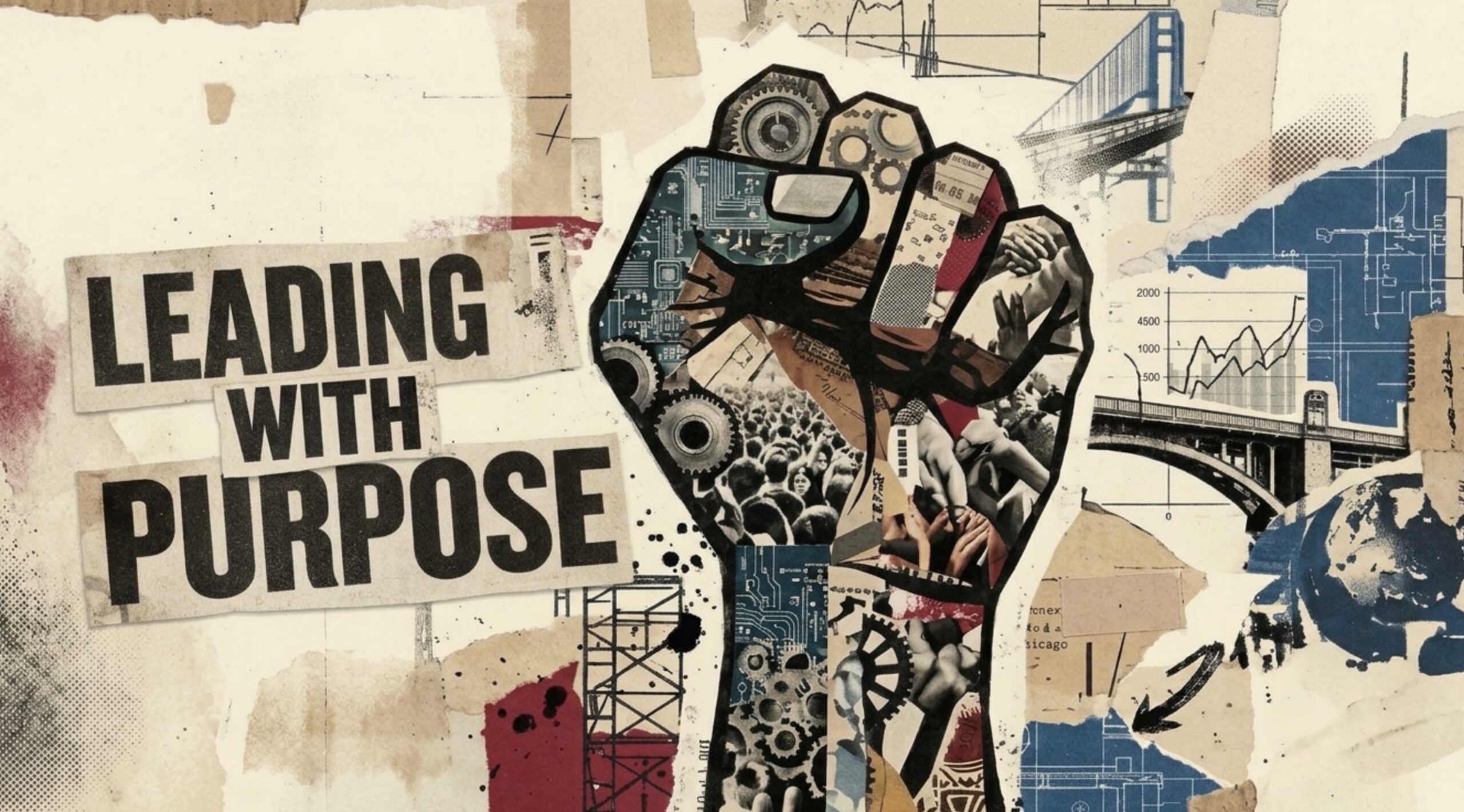
    Leading with Purpose: Let’s Turn Social Action into Living-Wage Careers

    Anthropic’s 5,300 founders and employees are now worth more than the bottom third of U.S. households (45 million families), according to economic analyst Steven Rattner. For companies like Anthropic to become more equitable, a new generation of learners needs to gain the experience that Big Tech values.

    I hope to do my part through AI Leaders, a program I helped launch in February.

    1,813 learners have joined AI Leaders in two cohorts. Our learners live in rural Louisiana, urban Chicago, and all over Bangladesh. They don’t have Ivy League credentials or family connections, but they’re hungry for new opportunities.

    The Skills Gap Is an Experience Gap

    Many workforce programs try to close a “skills gap” with courses and credentials. Our learners have taken countless such courses, but they still can’t get jobs.

    Credentials alone rarely open the door. Despite years of companies promising to hire for skills instead of degrees, fewer than 1 in 700 hires in 2023 actually benefited from the shift, according to Harvard and the Burning Glass Institute. Nearly half of the companies that dropped degree requirements changed them only in name.

    Credentials don’t reliably increase pay either. An HEA Group analysis of about 5,600 college certificate programs found that 46% of graduates earn less than $30,000 four years after completing the program.

    To get a living-wage you need experience that proves your skills are useful.

    Building Job Experience through Social Action

    Many people think experience requires an employer. It doesn’t. A problem in your community is a job for you to solve.

    Take the story of Kharielle, a graduate of our first cohort. While building her portfolio, she noticed that many of the gaps holding her back after being laid off from a tech support role were the same gaps holding back people like her. So rather than only improving her own position, she began designing a program to address those gaps for others like her. That work put her in conversation with employers we partner with, made her a far more compelling candidate, and led to several interviews. 

    The Social Action Loop

    I want to turn Kharielle’s story into a system that supports social action and leads to jobs, what I’ll call the “Social Action Loop.”

    1. Discovery. A person recognizes a personal gap as a shared gap.
    2. Building. They create a program that closes that gap for others and teaches them the Social Action Loop.
    3. Proof. The program becomes their experience, and it opens doors with employers.
    4. Shared Access. Every employer relationship the program opens stays open for future builders in AI Leaders.
    5. Reseeding. The people the program serves use the loop to tackle different social impact issues. Each new issue starts at Discovery, with more doors already open.

    With each turn, the loop adds builders and opens doors, so it grows on itself. That makes it economic development work, and AI Leaders can aim it first at the communities most at risk of being left behind.

    In Machines of Loving Grace, Anthropic CEO Dario Amodei writes that “AI companies and developed world policymakers will need to do their part to ensure that the developing world is not left out; the moral imperative is too great.” He also warns of an “opt-out problem,” in which people reject the benefits that AI makes possible. Builders in the loop are best placed to solve both problems: they make sure their communities aren’t left out and don’t opt out.

    Next Steps

    AI Leaders is Open Source and built by a community. I don’t control what learners pursue or what volunteers build, and I don’t want to. So instead of a prescriptive plan, I’m asking: if this problem matters to you, please comment. Tell me what you’d build, fund, or change.

    I’ll bring that feedback into a follow-up post with more concrete actions for our AI Leaders program.

    Together, let’s make sure the left-out aren’t left out, and grow a generation of socially engaged leaders.

  • Sermon on Boethius, Moral Responsibility, and Fun

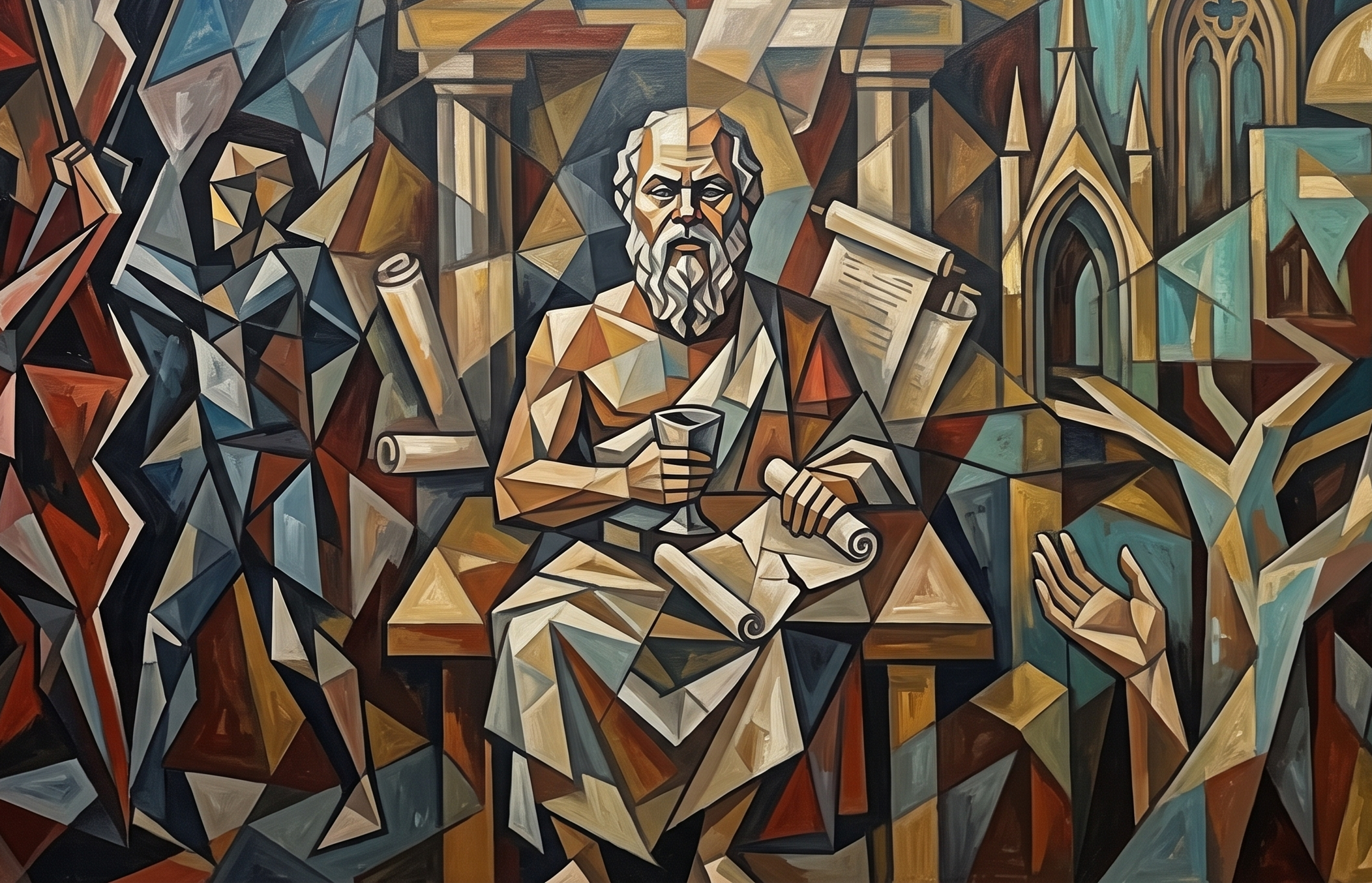
    Sermon on Boethius, Moral Responsibility, and Fun

    On the eve of NOAI, I am preparing to play my clarinet in front of a packed house at the New Orleans Jazz Museum. I am not a professional clarinetist. I play at a fifth-grade level. Yet I am going to lead a band’s march through the French Quarter, from the Jazz Museum to Francis Ford Coppola’s house.

    This sermon is about Boethius, moral responsibility, and fun.

    Playing the clarinet is fun for me. NOAI is fun for me. And Boethius, sitting in a prison cell awaiting execution, had a fun conversation with a spirit he called Philosophy.

    My priest, Sal Giambanco (former head of HR at PayPal), recommended Boethius to me as an antidote to Lucretius. Lucretius preached the gospel of pleasure: love thyself. Boethius preached the gospel of social responsibility: love thy neighbor.

    Lucretius deserves recognition as the patron saint of Effective Altruists and Rationalists, the “EA Rats.” He was a disciple of Epicurus, who lived in a commune with his friends, ate simply, and taught that we should enjoy life within reason. The Epicureans lived minimally, but they lived for their own health, in the name of a bigger philosophical project.

    Many of the EA Rats I know talk like Lucretius. Read Dario Amodei’s Machines of Loving Grace. It is the work of someone who believes he is curing most cancers and diseases. I do think AI is a net good. But I can’t unsee the big-headedness of EA Rat leaders like Dario, who certainly value their own lives over others’.

    Would society prosper if we selectively bred a humanity of EA Rats? Probably, yes. EA Rat prosperity is scientifically designed to produce more time and longer-lasting joy. Some EA Rats chase that joy in wildly stupid ways, like ketamine benders. But most seem like happy monks who eat the simple meals they like, spend time with close friends, and work on the ills humanity wants cured.

    Boethius, on the other hand, died a martyr’s death. He is the patron saint of politicians who speak truth to power. He was executed for loudly calling out corruption. And he is, quite literally, a saint: the Church venerates him as St. Severinus Boethius.

    Boethius’s Consolation of Philosophy shaped generations of Christian thinkers. Dante, Chaucer, and C.S. Lewis all drew deeply from it.

    Lucretius reached a broader audience. Machiavelli, Galileo, Isaac Newton, Thomas Jefferson, Karl Marx, and Michel Foucault all professed deep interest in him.

    Comparing influence alone, I’d say Lucretius had the upper hand in making the world a better place. But greatness is relative to its time and place.

    In the early Christian and medieval world, Lucretius was heresy, his poem nearly lost and kept locked away in monasteries. Self-flagellation and abstinence were the fashion. The rockstars of medieval Christianity were anchoresses, women who walled themselves into cells beside a church.

    Would the gospel of Dario Amodei be worshipped in that world? I doubt it. Amodei would likely suffer the fate of Galileo: publish work that changes science, then fall silent before larger political interests.

    What we can draw from Boethius and the Christian thinkers who followed him is a sense of moral responsibility. Boethius begins the Consolation lamenting his sadness and fear. He was going to be beaten to death with clubs. Philosophy helped him see that mortal pain and death did not matter, because he had lived in a way that was Good.

    Sure, Boethius’s life was not as long as it could have been. He could have paid lip service to corrupt leaders, as Amodei has with Donald Trump, and lived a bit longer. But by living in service of a greater duty to the Good, he built a platform that made his time valuable far beyond the years he was alive.

    So I close this sermon with a formula for EA Rats, utilitarians, Christians, Muslims, Jews, agnostics, and anyone who seeks the greatest good:

    Live as if all your actions will be judged by future generations. Live as if your life is an example of how to live. And, most importantly, live for the things that are both fun to you and make the world a better place.

    Pax et bonum.

    Have a good 11/11 y’all!

    PS: Attaching a picture of Jeremy Bentham to this post. EA Rats revere Bentham. He worked toward the Greater Good, which seems largely based on material goods. He lives on, stuffed, in a cabinet at University College London.

  • The Bandwagon: Claude Shannon, poteto, Frank Lloyd Wright, Dan Abramov, and the Importance of Process

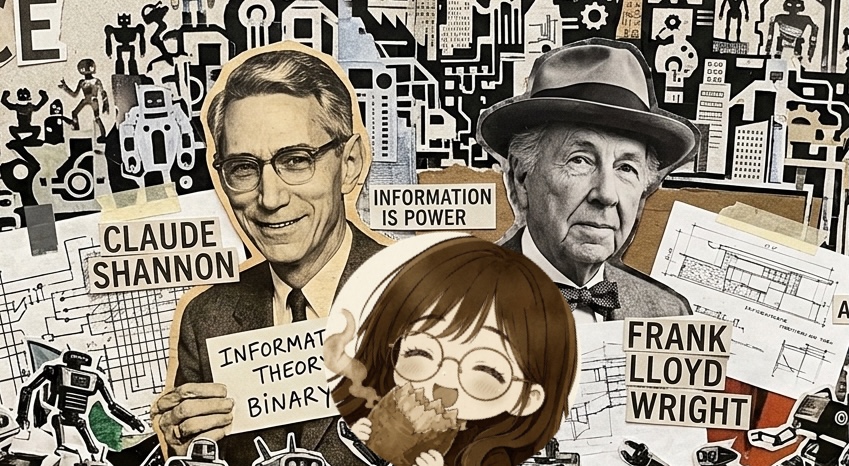
    The Bandwagon: Claude Shannon, poteto, Frank Lloyd Wright, Dan Abramov, and the Importance of Process

    I put together this set of required readings for the AI, Arts, and Ideas festival I run (NOAI), but I think everyone should read these:

    First: Claude Shannon’s one-page essay, The Bandwagon. Shannon founded information theory, helped launch AI as a field (he co-wrote the 1955 proposal for the Dartmouth workshop that coined the term), and is widely cited as the namesake of Anthropic’s Claude. In 1956, he wrote The Bandwagon to warn that his young discipline was being oversold.

    Try this as you read: replace “information theory” with “AI.” Suddenly it’s a letter to our moment. Is AI mostly hype? Are we neglecting slow, serious research? Will AI prove transformative everywhere, or only in a handful of fields?

    Shannon’s insistence on rigor reminded me of a second essay: How I Vibed a Proof of Conway’s Conjecture by Dan Abramov. Dan is known for co-creating Redux and for his work on React. He is not a mathematician. Should we take his proof seriously? His process closely mirrors how many big tech companies now build software using AI agents (see “How I Shipped 2,000 PRs Last Month — Trusting AI Agents”).

    We can clearly reach ambitious results without understanding every step that got us there. But should we? What do we risk when we can’t explain how something works?

    My hunch: We need both dreamers and builders. Architects and engineers.

    Last week, a visitor touring a Frank Lloyd Wright house was killed when high winds tore loose roofing material. Did Frank Lloyd Wright rely on as many engineers as he should’ve? Could experienced engineering have saved a life?

    The roof incident left me wondering how many decisions we’re making about AI right now without understanding the basics of what agents are doing. Blind trust and ambition seem to be the operating principles of our AI age.

    As AI reshapes how we work, create, and think, I hope we’ll all weigh both its dangers and its potential. The best response isn’t blind faith or blanket rejection. It’s experimentation, with our eyes open. I hope these readings leave you curious and open to whatever comes next.

  • arts & ideas fest 2026

    arts & ideas fest 2026

    Our schedule is published: https://fest.philosophers.group

    Register!

    High impact fun.

  • Iris: Beyond Solving Blindness

    Iris: Beyond Solving Blindness

    Imagine: You’re at a doctor’s office. You’re handed a form to fill out with your medical history. You glance at it then say, “okay – send.” The form is completed with your info and sent to the doctor.

    Biomarkers made sure you were the one giving consent to share information you carried around in a device that resembled a contact lens. You shared this information with no one. The computer was completely built in that contact lens.

    If you were blind, the contact lens could describe the world you encounter. It might even be hooked into your occipital lobe. Blindness is eradicated through one secure device you pop in each morning, or choose to have permanently implanted.

    That idea may seem like Science Fiction, but advances in AI and quantum computing can get us there.

    Where We Are Now

    Yesterday, I released a tool that turns PDFs into accessible HTML. Equalify Iris is Open Source software that solves a very big problem: PDF documents largely can’t be accessed by people who are blind.

    Iris took me about a month to build, after about five months of research.

    Next, I will create another tool that turns the accessible HTML back into the document. That will allow a blind person to both see and fill out forms they encounter. I should have the complete platform built by the New Year, and released in an app that anyone can use.

    These advances matter for blind people, and for anyone who’s ever hated filling out a form. Take something as routine as flying with a seeing-eye dog: the airline still requires a PDF. The PDF airlines send is usually unaccessible, meaning a blind person had to ask for third-party assistance to fill it out. With Iris, no third-party is needed.

    The TSA form is one of billions like it. PDF is a proprietary format that locks unstructured information inside one company’s innovation cycle. Helping blind people doesn’t make Adobe money, so the format remains largely inaccessible.

    Where We Can Go

    Fixing documents proves the technology’s ability to accurately understand visual information. But that technology could eventually move far beyond documents and into everything someone encounters in the real world.

    Imagine a blind person carrying an Iris device. They could point it at any device—a computer, phone, kiosk, ATM, appliance, ticket machine—and speak to Iris.

    Iris could see and understand the interface. If it also had a way to communicate with that device, it could control it.

    The user wouldn’t need a traditional screen reader. They wouldn’t need to learn the device’s accessibility settings, find the right navigation model, or wait for the manufacturer to build a compatible experience.

    They could simply say:

    “Send this email.”

    “Buy this ticket.”

    “Turn the heat down.”

    “Show me my balance.”

    “Play this video.”

    Iris would translate the user’s intent into actions on the device, while describing the results back to them.

    The important leap is that Iris wouldn’t need every device to have its own accessibility interface. Iris could become the accessibility interface.

    Documents are the proving ground. The larger vision is a universal interface between people and the visual technology around them.

    Evolution Through an AI Feedback Loop

    That kind of range is possible because of a key technological innovation already coded into the Equalify Iris project: an agentic feedback loop. The system constantly gets better. Every time someone adds content that the existing agents didn’t properly articulate, a sub-agent builds a fix, then posts that fix for review in the codebase. Eventually, there won’t be anything major to fix, and that’s when the agents move on to problems outside of documents.

    That’s how teaching a machine to read a document becomes an OS for sight. Once we solve blindness with our SightOS, what else can we do?

  • Should I be happy or justified?

    Should I be happy or justified?

    Most work today runs on deterministic goals — goals set at the outset, measured at the end. Businesspeople call these Key Performance Indicators, or KPIs. As I’ve taken my work more seriously, I’ve set myself increasingly ambitious goals: solve 1 million accessibility bugs, raise $500M. KPIs have been useful in telling the story of what I want to do and how well I have done it. In other words, they’ve given justification to my work. But I don’t think they have made me happier.

    A project usually follows the same emotional arc. It starts with a spike of optimism when you set the goal, followed by a smaller burst of motivation once the work begins. Then comes the long middle: a stretch dominated by stress, as KPI pressure and deadlines take over. At the end, there’s a brief spike of relief if you succeed, or sorrow if you don’t — and that spike rarely lasts. Even on a success, joy shows up only at the edges: optimism at the start, relief at the end. The rest is stress. And a bigger goal doesn’t seem to buy a meaningfully bigger peak at either end.

    Abandon KPIs altogether?

    My answer is increasingly that I should content myself with less ambitious goals. Instead of only asking which goal will make my boss happy, I am increasingly asking, “What goal can I work on that doesn’t stress me out?” In other words, my KPI in setting KPIs is becoming “amount of stress I get from pursuing this goal.”

    When I am unstressed, I sleep better, eat better, am friendlier, and am happier. The question always creeps in, “Can I be doing more?” But I find that my desire to make a greater impact is contented if my small KPI is part of a bigger picture. 

    That bigger picture becomes stressful if it is a KPI in itself. “Tackle 10 accessibility issues this year so I can reach 200 in 20 years” raises stressful questions because I have no idea what I will be doing in 20 years. A better big picture goal is abstract, like “be good to those around me and close with those I love.”

    I can both be happy and justified if I allow myself to be content with chipping away at modest goals that lead to a big, abstract picture of goodness.

  • AI Leaders Final Course: Job Search Feedback Loop

    AI Leaders Final Course: Job Search Feedback Loop

    I’m happy to announce that the final course of AI Leaders — Cohort 1 is posted!

    This course, like all the AI Leaders courses, is evidence-based:

    The course runs eight lessons, twenty minutes each, all on plato.

    Learners are guided to find 50 jobs they’re actually qualified for, apply to 3, reach out to 3 real people, and follow up without sounding like a sales cadence. Then the last lesson does something most courses don’t: if you haven’t landed something yet, it sends you right back to apply to 3 more.

    A job search isn’t a funnel you walk through once. It’s a loop you tune.

    That’s the spirit behind this course, and behind everything we teach in AI Leaders. We hope these lessons build more than a stronger candidate. We hope they build a stronger sense of self, so every student gets closer to their full potential.

    Next cohort coming soon. Sign up at AI-Leaders.org.

  • Living Without Free Will

    Living Without Free Will

    In Open Socrates, Philosopher Agnes Callard sees polarization as a good thing.

    Socrates is constantly faced with people who think they are right. His interlocutors’ polarizing attitudes give Socrates something to question. If Euthyphro, for instance, was so-so on whether he should charge his father with murder, Socrates wouldn’t have a subject to question.

    In the spirit of fostering polarizing thought, I am going to use this post to explore a topic I’ve been thinking about a lot: Free Will.

    I now believe in an omniscient God. We have no Free Will. All is determined. That which determines our life is, for lack of a better word, “God.”

    My days have been built around the question: “What do I fill my time with if all is already decided for me?” I have come to terms with time as an eternal present. Everything is already held in Truth that exists beyond me.

    My life has become what I can only describe as “religious.” I am engaged in a constant act of worshiping the All-Knowing.

    My religion does not have a Gospel. How could anything I create or understand represent the All-Knowing?

    I have nothing to worship but the knowledge that all is determined. I elevate nothing else, not even surrender.

    So, where does living without Free Will leave me?

    I believe the most holy people are those who fall silent after many years of hypothesis and inquiry. But I am also not sure about anything because I only give Truth (note the capital “T”) to the All-Knowing God. And since I am not sure about anything. Everything is absurd or perfect; no matter which. I must accept it all because it is as it must be. Without Free Will, I am free.

  • AI Leaders’ Finalists Graduate!

    AI Leaders’ Finalists Graduate!

    Congratulations to our first AI Leaders cohort of finalists! 36 individuals—the finalists from a cohort that started with over 500 applicants—completed a fully agentic course on AI Literacy and AI enablement, graduating together in Chicago.

    This wouldn’t have been possible without our partners at Automattic, University of Illinois Chicago, Louisiana Tech University, and University of Louisiana at Lafayette.

    Checkout all of our finalists porfolios. Here are some party pics from the graduation Automattic put on:

    Graduation is the first step, not the finish line. The real prize is living-wage jobs. We’ll be working closely with this class on that next phase.