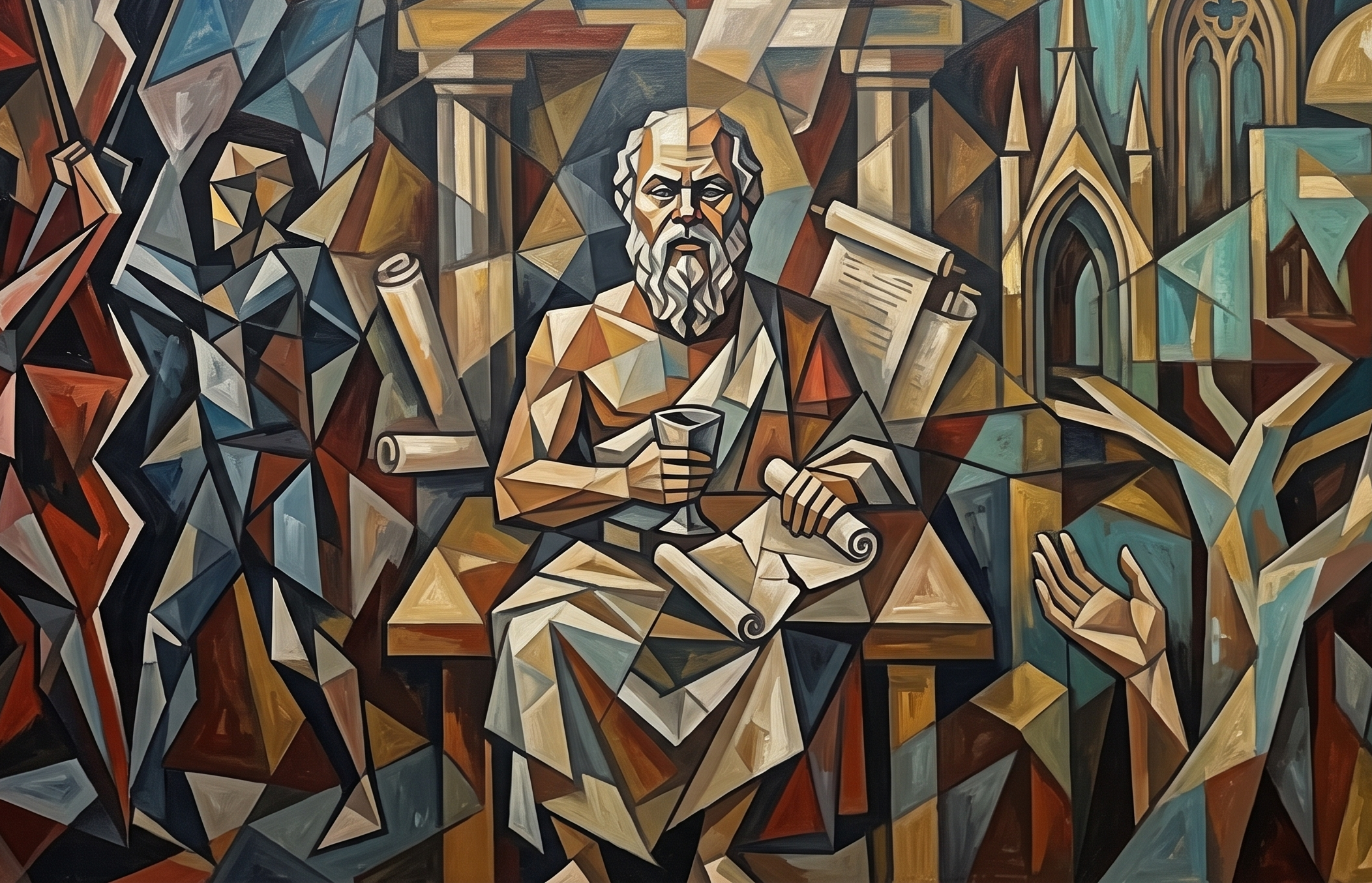

In Open Socrates, Philosopher Agnes Callard sees polarization as a good thing.
Socrates is constantly faced with people who think they are right. His interlocutors’ polarizing attitudes give Socrates something to question. If Euthyphro, for instance, was so-so on whether he should charge his father with murder, Socrates wouldn’t have a subject to question.
In the spirit of fostering polarizing thought, I am going to use this post to explore a topic I’ve been thinking about a lot: Free Will.
I now believe in an omniscient God. We have no Free Will. All is determined. That which determines our life is, for lack of a better word, “God.”
My days have been built around the question: “What do I fill my time with if all is already decided for me?” I have come to terms with time as an eternal present. Everything is already held in Truth that exists beyond me.
My life has become what I can only describe as “religious.” I am engaged in a constant act of worshiping the All-Knowing.
My religion does not have a Gospel. How could anything I create or understand represent the All-Knowing?
I have nothing to worship but the knowledge that all is determined. I elevate nothing else, not even surrender.
So, where does living without Free Will leave me?
I believe the most holy people are those who fall silent after many years of hypothesis and inquiry. But I am also not sure about anything because I only give Truth (note the capital “T”) to the All-Knowing God. And since I am not sure about anything. Everything is absurd or perfect; no matter which. I must accept it all because it is as it must be. Without Free Will, I am free.

Leave a Reply