
On the eve of NOAI, I am preparing to play my clarinet in front of a packed house at the New Orleans Jazz Museum. I am not a professional clarinetist. I play at a fifth-grade level. Yet I am going to lead a band’s march through the French Quarter, from the Jazz Museum to Francis Ford Coppola’s house.
This sermon is about Boethius, moral responsibility, and fun.
Playing the clarinet is fun for me. NOAI is fun for me. And Boethius, sitting in a prison cell awaiting execution, had a fun conversation with a spirit he called Philosophy.
My priest, Sal Giambanco (former head of HR at PayPal), recommended Boethius to me as an antidote to Lucretius. Lucretius preached the gospel of pleasure: love thyself. Boethius preached the gospel of social responsibility: love thy neighbor.
Lucretius deserves recognition as the patron saint of Effective Altruists and Rationalists, the “EA Rats.” He was a disciple of Epicurus, who lived in a commune with his friends, ate simply, and taught that we should enjoy life within reason. The Epicureans lived minimally, but they lived for their own health, in the name of a bigger philosophical project.
Many of the EA Rats I know talk like Lucretius. Read Dario Amodei’s Machines of Loving Grace. It is the work of someone who believes he is curing most cancers and diseases. I do think AI is a net good. But I can’t unsee the big-headedness of EA Rat leaders like Dario, who certainly value their own lives over others’.
Would society prosper if we selectively bred a humanity of EA Rats? Probably, yes. EA Rat prosperity is scientifically designed to produce more time and longer-lasting joy. Some EA Rats chase that joy in wildly stupid ways, like ketamine benders. But most seem like happy monks who eat the simple meals they like, spend time with close friends, and work on the ills humanity wants cured.
Boethius, on the other hand, died a martyr’s death. He is the patron saint of politicians who speak truth to power. He was executed for loudly calling out corruption. And he is, quite literally, a saint: the Church venerates him as St. Severinus Boethius.
Boethius’s Consolation of Philosophy shaped generations of Christian thinkers. Dante, Chaucer, and C.S. Lewis all drew deeply from it.
Lucretius reached a broader audience. Machiavelli, Galileo, Isaac Newton, Thomas Jefferson, Karl Marx, and Michel Foucault all professed deep interest in him.
Comparing influence alone, I’d say Lucretius had the upper hand in making the world a better place. But greatness is relative to its time and place.
In the early Christian and medieval world, Lucretius was heresy, his poem nearly lost and kept locked away in monasteries. Self-flagellation and abstinence were the fashion. The rockstars of medieval Christianity were anchoresses, women who walled themselves into cells beside a church.
Would the gospel of Dario Amodei be worshipped in that world? I doubt it. Amodei would likely suffer the fate of Galileo: publish work that changes science, then fall silent before larger political interests.
What we can draw from Boethius and the Christian thinkers who followed him is a sense of moral responsibility. Boethius begins the Consolation lamenting his sadness and fear. He was going to be beaten to death with clubs. Philosophy helped him see that mortal pain and death did not matter, because he had lived in a way that was Good.
Sure, Boethius’s life was not as long as it could have been. He could have paid lip service to corrupt leaders, as Amodei has with Donald Trump, and lived a bit longer. But by living in service of a greater duty to the Good, he built a platform that made his time valuable far beyond the years he was alive.
So I close this sermon with a formula for EA Rats, utilitarians, Christians, Muslims, Jews, agnostics, and anyone who seeks the greatest good:
Live as if all your actions will be judged by future generations. Live as if your life is an example of how to live. And, most importantly, live for the things that are both fun to you and make the world a better place.
Pax et bonum.
Have a good 11/11 y’all!
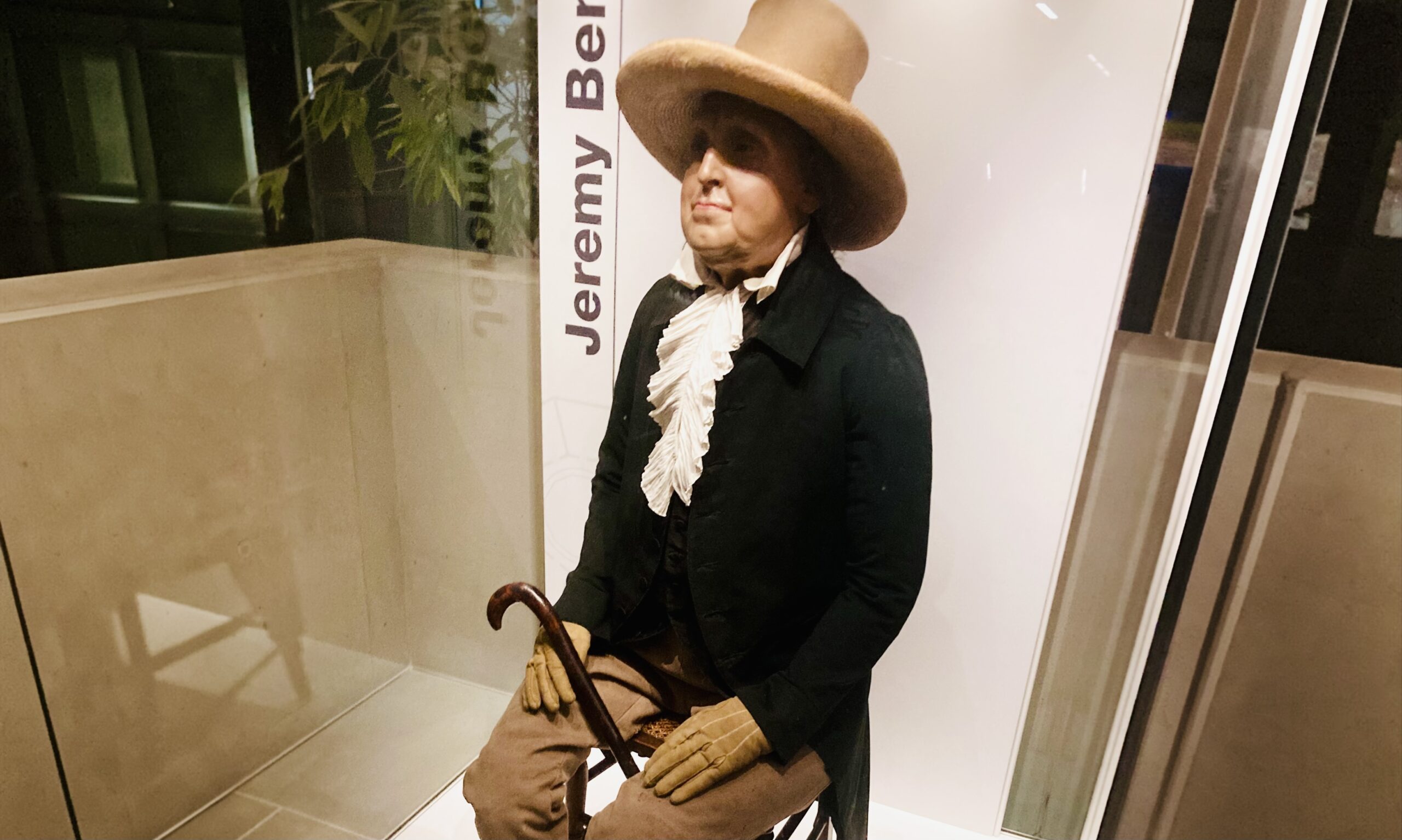
PS: Attaching a picture of Jeremy Bentham to this post. EA Rats revere Bentham. He worked toward the Greater Good, which seems largely based on material goods. He lives on, stuffed, in a cabinet at University College London.
Leave a Reply