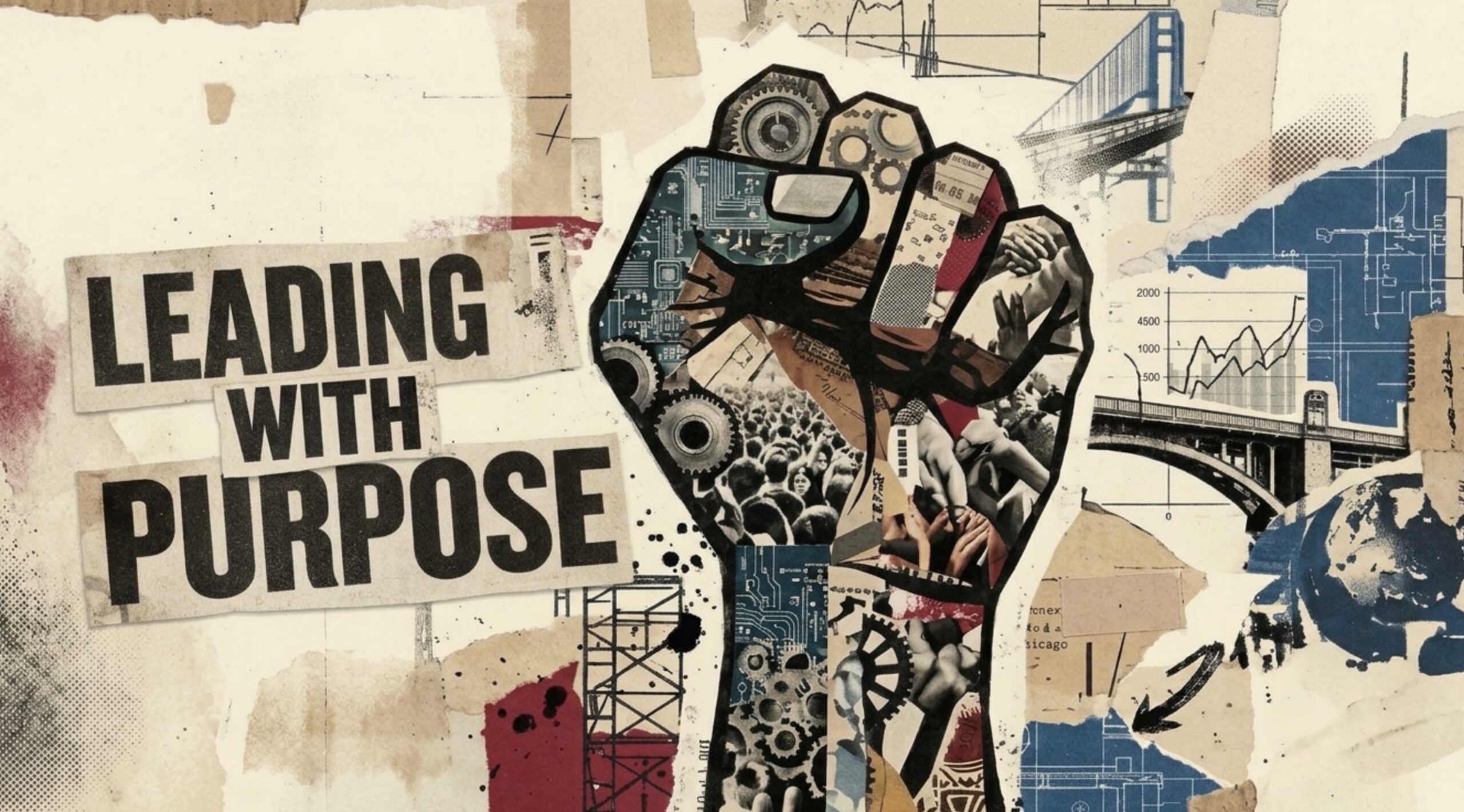

Anthropic’s 5,300 founders and employees are now worth more than the bottom third of U.S. households (45 million families), according to economic analyst Steven Rattner. For companies like Anthropic to become more equitable, a new generation of learners needs the experience these companies value.
I hope to do my part through AI Leaders, a program I helped launch in February.
1,813 learners have joined AI Leaders in two cohorts. Our learners live in rural Louisiana, urban Chicago, and all over Bangladesh. They don’t have Ivy League credentials or family connections, but they’re hungry for new opportunities.
The Skills Gap Is an Experience Gap
Many workforce programs try to close a “skills gap” with courses and credentials. Our learners have taken countless such courses, but they still can’t get jobs.
Employers I speak with value experience over credentials. They’re flooded with applicants holding certificates from Google, Microsoft, and every other major company. What sets a candidate apart is work on real projects that look like their business.
Credentials alone rarely open the door. Despite years of companies promising to hire for skills instead of degrees, fewer than 1 in 700 hires in 2023 actually benefited from the shift, according to Harvard and the Burning Glass Institute. Nearly half of the companies that dropped degree requirements changed them only in name.
Credentials don’t reliably pay off, either. An HEA Group analysis of about 5,600 college certificate programs found that 46% of graduates earn less than $30,000 four years after completing the program.
A living wage requires a job that values what you can do, and experience is what proves it.
Building Job Experience through Social Action
Many people think experience requires an employer. It doesn’t. Any problem in your community can be a job for you to solve.
Take the story of Kharielle, a graduate of our first cohort. While building her portfolio, she noticed that many of the gaps holding her back after being laid off from a tech support role were the same gaps holding back people like her. So rather than only improving her own position, she began designing a program to address those gaps for others like her. That work put her in conversation with employers we partner with, made her a far more compelling candidate, and led to several interviews.
Kharielle’s story shows that personal ambition and social action aren’t competing priorities; each one powers the other.
The Social Action Loop
From Kharielle’s story, I see what I’ll call “The Social Action Loop”: one person recognizes a personal gap as a shared gap. They build a program to close the gap, open doors with employers, and reshape society.
That loop can become a method for AI Leaders. We can help job seekers gain experience by solving problems in their own backyard. This is economic development work.
In Machines of Loving Grace, Anthropic CEO Dario Amodei writes that “AI companies and developed world policymakers will need to do their part to ensure that the developing world is not left out; the moral imperative is too great.” He also warns of an “opt-out problem,” in which people reject the benefits that AI makes possible. Learners who build programs in their own communities are best placed to solve both problems: ensuring their communities aren’t left out and that they don’t opt out.
Next Steps
AI Leaders is open source and built by a community. I don’t control what learners pursue or what volunteers build, and I don’t want to. So instead of a prescriptive plan, I’m asking: if this problem matters to you, comment on it. Tell me what you’d build, fund, or change.
I’ll bring that feedback into a follow-up post with more concrete actions.
Together, let’s make sure the left-out aren’t left out, and grow a generation of socially engaged leaders.

Leave a Reply