
Imagine: You’re at a doctor’s office. You’re handed a form to fill out with your medical history. You glance at it then say, “okay – send.” The form is completed with your info and sent to the doctor.
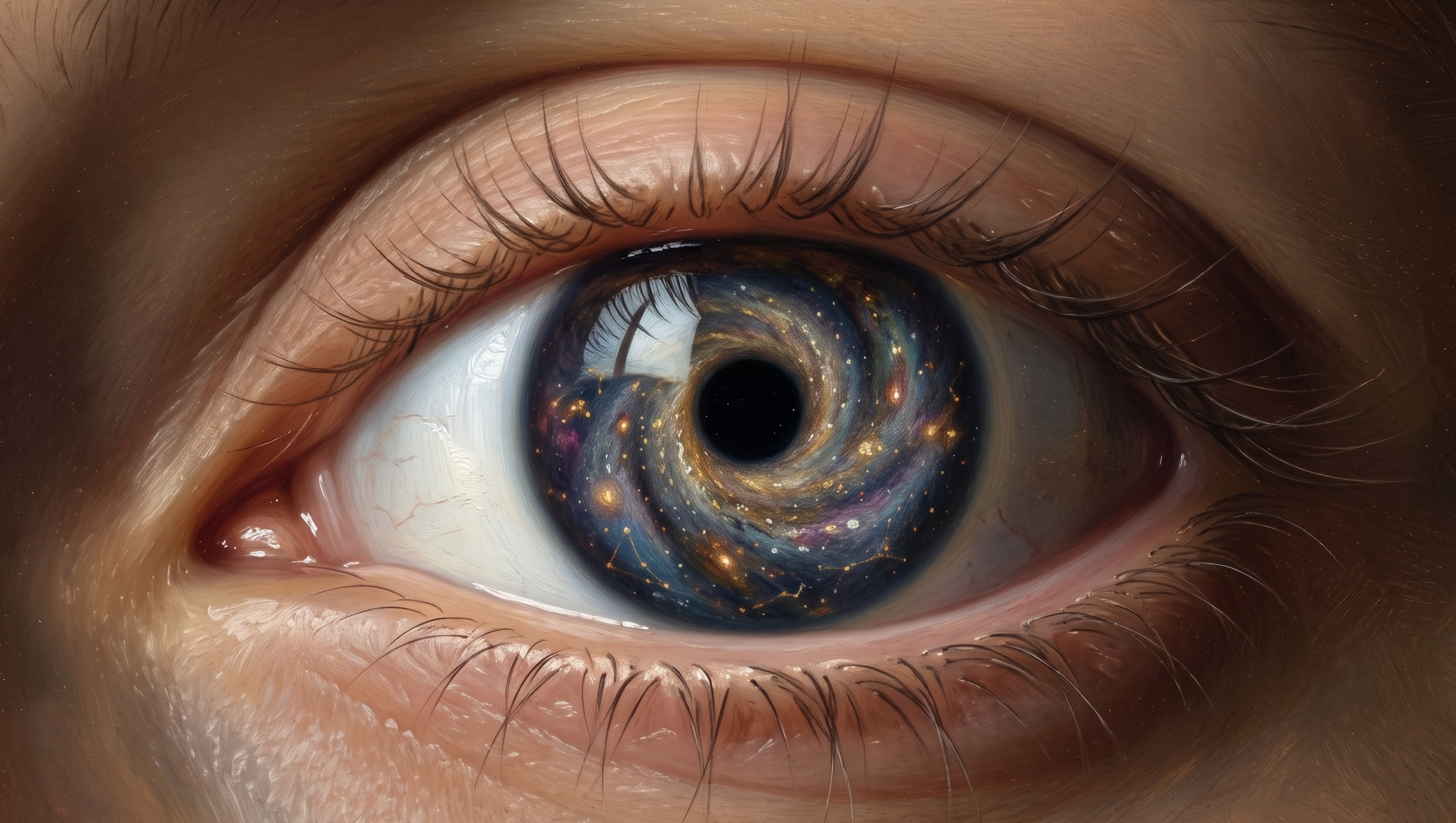
Biomarkers made sure you were the one giving consent to share information you carried around in a device that resembled a contact lens. You shared this information with no one. The computer was completely built in that contact lens.
If you were blind, the contact lens could describe the world you encounter. It might even be hooked into your occipital lobe. Blindness is eradicated through one secure device you pop in each morning, or choose to have permanently implanted.
That idea may seem like Science Fiction, but advances in AI and quantum computing can get us there.
Where We Are Now
Yesterday, I released a tool that turns PDFs into accessible HTML. Equalify Iris is Open Source software that solves a very big problem: PDF documents largely can’t be accessed by people who are blind.
Iris took me about a month to build, after about five months of research.
Next, I will create another tool that turns the accessible HTML back into the document. That will allow a blind person to both see and fill out forms they encounter. I should have the complete platform built by the New Year, and released in an app that anyone can use.
These advances matter for blind people, and for anyone who’s ever hated filling out a form. Take something as routine as flying with a seeing-eye dog: the airline still requires a PDF. The PDF airlines send is usually unaccessible, meaning a blind person had to ask for third-party assistance to fill it out. With Iris, no third-party is needed.
The TSA form is one of billions like it. PDF is a proprietary format that locks unstructured information inside one company’s innovation cycle. Helping blind people doesn’t make Adobe money, so the format remains largely inaccessible.
Where We Can Go
Fixing documents proves the technology’s ability to accurately understand visual information. But that technology could eventually move far beyond documents and into everything someone encounters in the real world.
Imagine a blind person carrying an Iris device. They could point it at any device—a computer, phone, kiosk, ATM, appliance, ticket machine—and speak to Iris.
Iris could see and understand the interface. If it also had a way to communicate with that device, it could control it.
The user wouldn’t need a traditional screen reader. They wouldn’t need to learn the device’s accessibility settings, find the right navigation model, or wait for the manufacturer to build a compatible experience.
They could simply say:
“Send this email.”
“Buy this ticket.”
“Turn the heat down.”
“Show me my balance.”
“Play this video.”
Iris would translate the user’s intent into actions on the device, while describing the results back to them.
The important leap is that Iris wouldn’t need every device to have its own accessibility interface. Iris could become the accessibility interface.
Documents are the proving ground. The larger vision is a universal interface between people and the visual technology around them.
Evolution Through an AI Feedback Loop
That kind of range is possible because of a key technological innovation already coded into the Equalify Iris project: an agentic feedback loop. The system constantly gets better. Every time someone adds content that the existing agents didn’t properly articulate, a sub-agent builds a fix, then posts that fix for review in the codebase. Eventually, there won’t be anything major to fix, and that’s when the agents move on to problems outside of documents.
That’s how teaching a machine to read a document becomes an OS for sight. Once we solve blindness with our SightOS, what else can we do?
Leave a Reply