
Bite-Sized but Whole: Applying Microlearning in plato
Here at the 11:11 Philosopher’s Group, we’ve been exploring how learning should be generative, dynamic, and accessible to everyone. With the launch of plato, our open-source, AI-powered education platform, we are moving away from the “static content” models that age like textbooks.
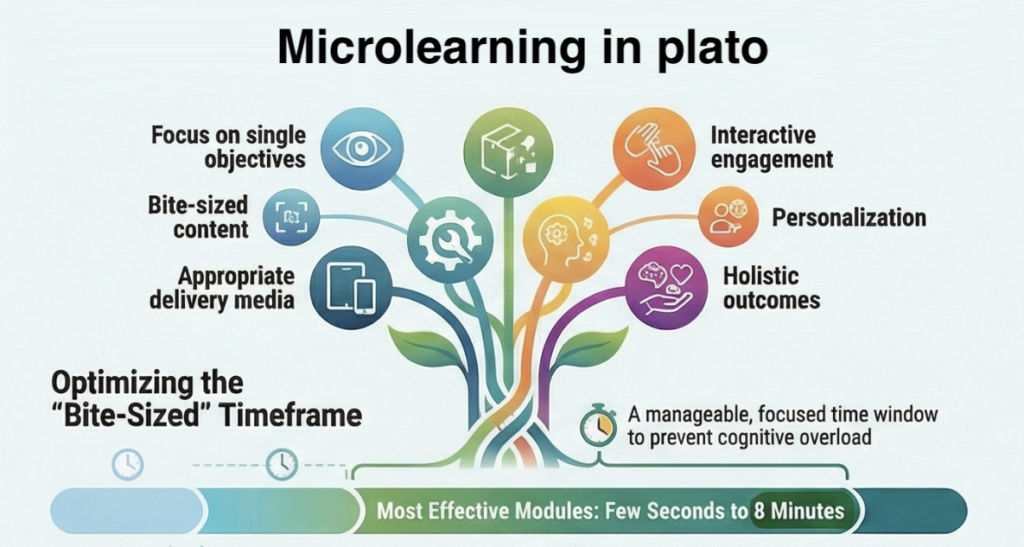
As we scale plato to support agentic classrooms, we must critically evaluate the instructional methods we use to power it. One of the most talked-about approaches today is microlearning—an instructional method that delivers targeted, action-oriented, bite-sized content designed to achieve specific objectives in a short timeframe.
Microlearning has incredible potential, but like any tool, it must be wielded correctly. Here is how we should—and shouldn’t—apply microlearning within the plato ecosystem.
The Promise of Microlearning
At its core, microlearning is built around managing “cognitive load”—the amount of information our working memory can hold at once. By breaking complex subjects into highly focused, multisensory, and personalized chunks, microlearning prevents learners from becoming overwhelmed. Research shows that it improves knowledge retention, boosts engagement, and increases learners’ motivation, self-efficacy, and satisfaction. It fits perfectly into modern, busy lifestyles, providing “just-in-time” learning exactly when it is needed.
However, the risk of microlearning is fragmentation. If not carefully designed, delivering isolated snippets can cause learners to lose sight of the big picture, especially if they lack the prior background knowledge needed to contextualize what they are learning.
How Microlearning SHOULD NOT be applied with plato:
- Don’t generate static, isolated snippets: The biggest problem with traditional digital education is that it relies on static content that pushes people to single outcomes. We shouldn’t use plato to simply churn out unadaptable, disconnected “bite-sized” PDFs or videos that sit there aging.
- Don’t ignore the learner’s shifting interests: A fixed curriculum of micro-lessons cannot serve everyone well. If plato is just feeding users a pre-determined sequence of short lessons without adapting to their goals, we are fundamentally misusing the platform’s generative capabilities.
- Don’t lose the “wholeness”: We aim for what Plato called Eudaimonia—a dynamic, alive wholeness. Using microlearning to rigidly separate concepts without ever bridging them together betrays the complex, dynamic reality of true education.
How Microlearning SHOULD be applied with plato:
- Use the AI Coach for dynamic personalization: Microlearning requires content that is tailored to individual learning styles, prior knowledge, and situational constraints. plato’s AI coach is perfectly suited for this. Because plato creates a “living curriculum,” it can dynamically generate bite-sized lessons that adapt in real-time to what the learner is actually interested in.
- Focus on a single objective, guided by an exemplar: A guiding principle of effective microlearning is that every module must have one single, well-defined, action-oriented objective. In plato, the AI coach can deliver a bite-sized activity tailored to that single objective and instantly assess the learner’s work. If the learner struggles, the coach doesn’t overwhelm them with a textbook; it offers targeted questions to guide them step-by-step toward the course exemplar.
- Weave the micro into the macro: plato can solve microlearning’s “fragmentation” problem. While the learner interacts with easily digestible, bite-sized tasks, plato’s underlying system ensures that every short burst of learning is seamlessly strung together. The system tracks the overarching goals set by the educator, ensuring that the micro-lessons accumulate into a cohesive understanding of complex topics.
Just as WordPress democratized website publishing, plato aims to empower learning for everyone. By thoughtfully integrating microlearning—focusing on highly adaptive, specific, bite-sized interactions while trusting plato’s AI coach to maintain the overarching narrative—we can build classrooms that are as dynamic, alive, and whole as the students themselves
Leave a Reply